
Sourced by A/Prof Vanessa Panettieri, Editor (Educational), AFOMP Pulse
From Colliders to Clinics: The Accelerator Innovations Enabling Future Cancer Treatments
When a ‘particle accelerator’ is mentioned, what springs to mind? For many, it’s the colossal colliders in Europe and America, famous for their immense scale and substantial budgets. However, the vast majority of accelerators worldwide are much smaller, discreetly operating in processing plants, factories, and even hospitals.

Worldwide, there are over 20,000 radiotherapy linear accelerators (or ‘linacs’) producing X-Ray beams that contribute to the successful treatment of approximately 40% of cancers. In recent decades, proton therapy – which also relies on accelerator technologies – has emerged as a promising alternative, offering advantages in certain scenarios.
The efficacy of proton therapy lies in its method of energy deposition. Imagine the contrast between ten-pin bowling and lawn bowls: akin to X-Rays, bowling balls in the ten-pin game carry on travelling even after hitting obstacles, whereas in lawn bowls, our proton analogue has a well-defined stopping distance. Extending this analogy further, the depth at which a proton stops, depositing most of the dose, is determined by the amount of energy it starts with. This allows for precise ‘dose painting’ of tumours, involving scanning the proton beam and modulating its energy to cover the treatment area. Consequently, in situations where X-Ray radiotherapy is unsuitable – due to the proximity of sensitive organs, or in treating childhood cancers – proton therapy becomes the preferred choice.
Despite these advantages, there about 100 times fewer proton therapy facilities than X-Ray linacs. Part of the cause of this discrepancy is due to the size of the machine: an X-Ray linac fits comfortably in a room a few metres across, whereas a proton therapy facility requires a dedicated building. The corresponding price tag associated with proton therapy is accordingly far higher.
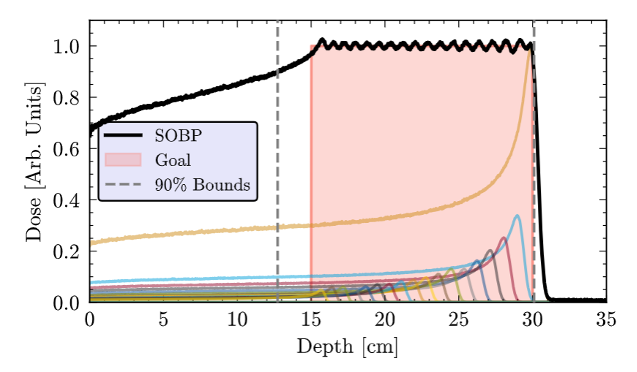
Moreover, there are still major bottlenecks with proton therapy to overcome. One of the most significant of these is the time taken to switch the beam energy, primarily limited by the magnets used in accelerators and beam delivery systems. The magnetic field strength must align with particle energy to effectively steer and focus the beam, typically achieved by varying the magnetic field over time. This process takes several seconds to span the full range of treatment energies, during which time any patient motion can severely deteriorate the treatment quality.
The benefits of downsizing the beam delivery system and speeding up the treatments are evident. Surprisingly, one technological advancement may be the key to solving both problems.
Rather than having magnetic fields that vary in time, researchers at the University of Melbourne are exploring the potential of magnets where the field varies in space. Project TURBO (‘Technology for Ultra-Rapid Beam Operation’) employs fixed field magnets to steer and focus a large range of beam energies concurrently, with each energy following a unique path through the beamline. This innovation promises treatments an order of magnitude faster than currently feasible, and as a bonus, stronger magnets can be used since there’s no need to ramp the fields over time. This technological leap offers a pathway to reducing facility footprint while enabling ultra-rapid treatments.
Naturally, these claims require evidence. Although simulations suggest no major obstacles, an experimental demonstration is necessary. However, doing this at the energies required for proton therapy would be exceedingly costly, with no guarantee of success. Therefore, the Melbourne University team is constructing a scaled-down technology demonstrator, utilising a low energy ‘Pelletron’ particle accelerator made available as one of Australia’s Heavy Ion Accelerators, under the National Collaborative Research Infrastructure Strategy.
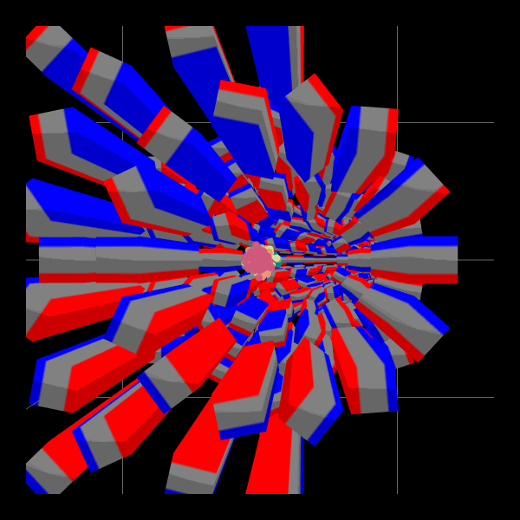
Static magnetic fields have other advantages over conventional accelerators. As an example, rather than using more conventional electromagnets, the TURBO technology demonstrator uses permanent magnets. These magnets are reminiscent of those holding up menus on your fridge, but they are about one hundred times stronger, and their fields must be finely tuned to accurately steer particle beams. To generate the necessary magnetic fields, TURBO will utilise many identical blocks of permanent magnet material arranged in custom mounts, allowing for reconfiguration and reuse in various projects. While permanent magnets would not be suitable for full-scale beam delivery systems – superconducting magnets with stronger fields are preferred for reducing facility size – they are ideal for demonstrations at this scale.
Proton therapy is emerging as a vital weapon in the fight against cancer, yet its potential can only be fully realised through further innovation. Techniques like the ultra-rapid beam delivery offered by TURBO are paving the way for more effective and accessible treatments, but there is much more work to do before this makes it to the clinic.
So, next time you hear about particle accelerators, instead of picturing far-off colliders, consider the hundreds of proton therapy machines operating worldwide. Think about the cutting-edge science driving them and the innovations that promise to make this key technology even more widely available in the future.
Dr Adam Steinberg,
Research Fellow in Accelerator Science
The University of Melbourne