Sourced by Assoc. Prof Vanessa Panettieri, Editor (Educational)
AI-Powered Breakthroughs in Early Cancer & NCD Detection
By MD Saib Hossain1 and Prof. Dr. Hasin Anupama Azhari1, 2
1United International University (UIU)
2 South Asia Centre for Medical Physics and Cancer Research, Alo Bhubon Trust (ALO-BT)
Healthcare is shifting from reactive treatment to proactive prediction. Artificial Intelligence is no longer a theoretical concept; it is actively reshaping the early detection of diseases, especially cancers and other non-communicable diseases, long before physical symptoms emerge.
1. The Challenge of NCDs and Cancers
Before discussing artificial intelligence, first define the problem. The biggest threat to global health today comes from Non-Communicable Diseases (NCDs). According to the World Health Organization (WHO), NCDs are chronic conditions that are not passed from person to person. They include cardiovascular diseases (like heart attacks and strokes), chronic respiratory diseases (like asthma), diabetes, and cancers. NCDs are responsible for a staggering 74% of all deaths worldwide [1]. Cancer is a primary category of NCDs and is a leading cause of death globally. Cancer is not just one disease. It is a large group of diseases that can start in almost any organ or tissue when abnormal cells grow uncontrollably. The most common and deadly types globally include: Lung Cancer, the leading cause of cancer deaths. Often linked to smoking and air pollution. Breast Cancer is the most common cancer globally among women. Colorectal Cancer affects the colon or rectum, which is heavily influenced by diet and lifestyle. Prostate Cancer, the most common cancer among men in many countries [2].
The Traditional Approach: How it is Detected Without AI
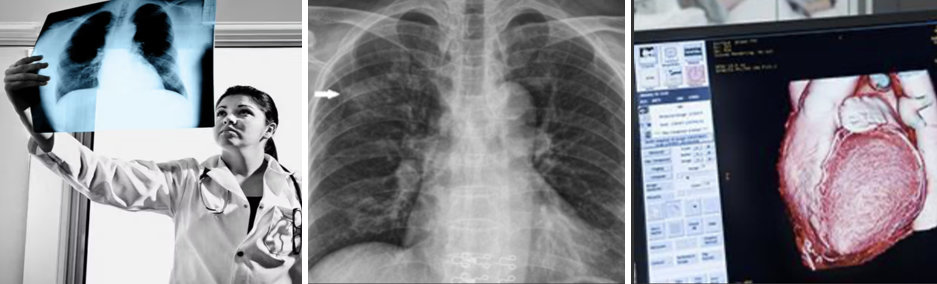
For decades, doctors relied entirely on physical symptoms, routine screenings, and human observation to detect these diseases. For example: Diabetes: Detected through routine blood sugar tests, often only after a patient reports symptoms like extreme fatigue or thirst. Cancer: Found using manual screenings, such as a radiologist examining a mammogram for breast cancer, or a pathologist looking at tissue on a glass slide under a microscope to spot abnormal cells. This traditional method (Figure 1) had a major flaw: human error and fatigue. A doctor viewing their 50th X-ray of the day might have missed a microscopic shadow on a lung that indicated early-stage cancer. By the time many NCDs and cancers showed obvious physical symptoms, the disease was often in an advanced stage, making treatment difficult.
2. Decades of Data and How AI Helps Us Now
Over the years, the traditional methods generated something incredibly valuable: data. Every blood test, tumor registry, and clinical trial was recorded. This massive accumulation of historical medical data acts as the ultimate textbook for machine learning models.
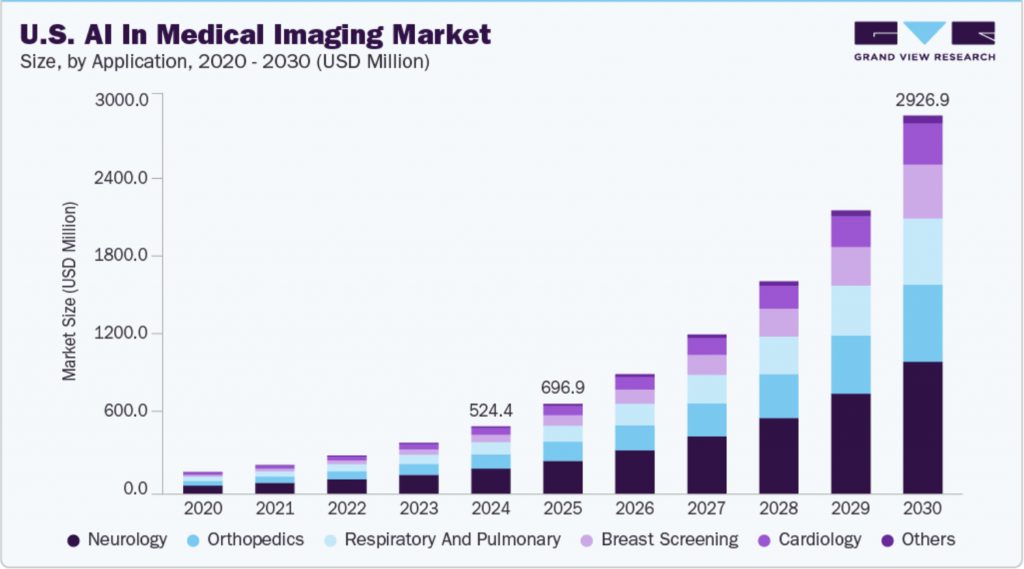
By feeding decades of patient records into AI systems, models are learning to see what the human eye cannot. Because humans have mapped the progression of diseases like diabetes and lung cancer so thoroughly, AI can now identify the hidden, subtle biological patterns that precede a diagnosis. Today’s AI uses advanced architectures to assist doctors: Image-Based Classifiers and Vision Models: These models can process thousands of X-rays, MRIs, and pathology slides in a fraction of a second. They act as a tireless second pair of eyes. For instance, vision models are now used heavily in oncology to flag tiny anomalies in lung or breast tissue that a human might overlook. Biology-Based Large Language Models (LLMs): These models can instantly read and cross-reference a patient’s entire medical history to predict outcomes faster and more accurately than human specialists. Recent benchmarking results of frontier AI models show unprecedented clinical capabilities. A June 2026 study highlighted in Nature Medicine tested top-tier models on the MedQA benchmark (a dataset of difficult medical questions). The results were astounding: Gemini 3.1 Pro achieved a 97.4% accuracy rate. Other frontier models like Claude Opus 4.6 and GPT-5.2 similarly outperformed specialized clinical AI tools [3]. These models do not suffer from fatigue, ensuring that the last scan of a 12-hour hospital shift gets the same rigorous, mathematically precise analysis as the first.
3. What’s Next? The New Frontiers of Biological AI
While being able to answer complex medical questions is impressive, the next generation of AI is unlocking completely new possibilities in structural biology and patient care, for Example:
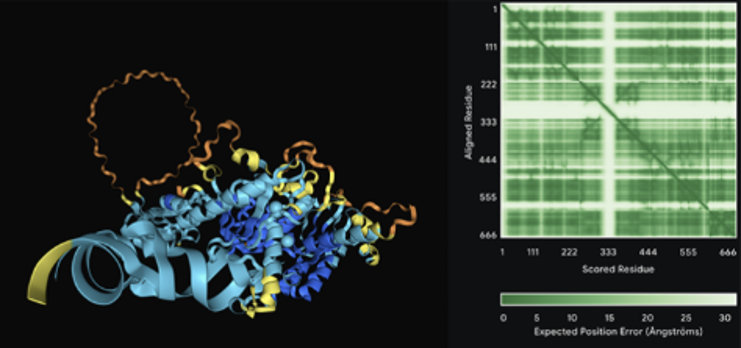
AlphaFold 3: Developed by Google DeepMind and Isomorphic Labs, AlphaFold 3 represents a monumental leap in computational biology. Moving beyond just predicting protein structures, it can predict the structures and interactions of nearly all biomolecules, including DNA, RNA, and small drug molecules. This capability is revolutionizing drug discovery by allowing researchers to simulate how a new cancer drug might bind to a specific cellular target with unprecedented accuracy, drastically speeding up the creation of new medicines [4].
Med-Gemini: Google Research has also detailed the capabilities of Med-Gemini, a multimodal AI designed specifically for healthcare. Unlike standard text models, Med-Gemini can digest a patient’s entire medical history alongside genomic sequences and medical images all at once. Crucially, it features “uncertainty-guided search.” If the AI is not confident in its diagnostic reasoning, it doesn’t make a blind guess; instead, it actively searches trusted clinical literature to retrieve supporting evidence before making a recommendation to the doctor [5].
4. The Safety Bottleneck: Tech vs. Policy
AI labs compete fiercely to release the most capable models, but face a critical bottleneck: the pace of AI safety and policy cannot keep up with technological advancement. As the medical field increasingly moves towards highly automated systems, ensuring the safe and consistent performance of these devices is becoming critically important.
5. The Blame Game: Who is Responsible?
This brings us to the most complex question surrounding AI in healthcare: liability and responsibility. If an AI system analyzes a patient’s data, makes a mistake, and misses a microscopic early indicator of cancer,
Who is to blame? Is it the AI lab that developed and trained the model on potentially flawed data? Is it the doctor or the hospital that trusted the AI’s recommendation instead of their own judgment? Is it the government or regulatory body that approved the AI tool for clinical use? Or does the responsibility lie with a younger generation of users and practitioners who have become overly reliant on automated systems?
According to researchers at Harvard Business School, medical liability for AI requires separating “AI-controllable errors” from natural disease progression, which is incredibly difficult to do in a court of law [6]. I will leave the answer for the reader to ponder. As AI becomes an invisible partner in the examination room, how do humans balance the immense potential for saving lives with the profound weight of accountability?
- NCD Data: World Health Organization. “Noncommunicable diseases fact sheet.” (2026). Read Here
- Cancer Data: World Health Organization. “Cancer fact sheet.” (2026). Read Here
- Clinical Benchmarks: Oermann, et al. “ChatGPT, Gemini, Claude outperform clinical AI tools: Study.” Becker’s Hospital Review (June 2026). Read Here
- AlphaFold 3 Capabilities: DeepMind & Isomorphic Labs. “Accurate structure prediction of biomolecular interactions with AlphaFold 3.” Drug Discovery Trends (2024). Read Here
- Med-Gemini: Google Research. “Advancing medical AI with Med-Gemini.” Google Research Blog (May 2024). Read Here
- AI Liability: Harvard Business School. “Optimal Medical Liability for AI.” Working Paper (2026). Read Here

Md Saib Hossain
AI Engineer & Researcher,
Institute of Advanced Research (UIU)

Dr. Hasin Anupama Azhari Prof, INS, (UIU) |
President, AFOMP | Director, SCMPCR,Cancer Researcher, Institute of Advanced Research (UIU)
Secretary General, Alo Bhubon Trust (ALO-BT)