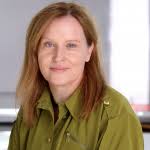
Eva Bezak
The Immediate Past President of the Asian-Oceanian Federation of Organizations for
Medical Physics (AFOMP)
On 8th March, we celebrate the International Women’s Day, honouring the achievements of women across our Asia-Oceania region, including their scientific competence, intellectual rigor, curiosity, and different perspective that women bring to medical physics and healthcare.
When asked to write this short article for the AFOMP PULSE newsletter, I reflected on my own journey: I wanted to be a scientist from early childhood.
Initially, a palaeontologist (well, what child does not want to dig for dinosaur bones) and then, at about 14 years of age, I decided to study physics – a subject that would enable me to understand the workings of our universe. It was not completely surprising, as I was good at maths and sciences, developing in Year 6 (primary school) my own solutions to some combinatorics problems and equations with one unknown. When deciding on my university studies, I looked at the list of most difficult courses, and right at the top was nuclear physics. So that was what I decided to enroll in; perhaps making my parents a bit disappointed for not going to medicine, but they would never try to discourage me from my own decisions. That it is perhaps what drove me in life: looking at difficulties as challenges that were there to tackle rather than being afraid of problems.
Have I met with discrimination? Yes, unfortunately. I feel that women have to prove themselves in a number of ways: a) that they are competent scientists and b) that they can manage work, high level appointments with family and household duties. But I can stand my ground. Luckily, times seem to be changing. In the years post PhD, I became the first female president of the Australasian College of Physical Scientists and Engineers in Medicine, I was the first female president of AFOMP and now I am honoured to serve as president of IOMP.
Additionally, I was a founding member of Women in Medical Physics and Biomedical Engineering Task Group under IUPESM. My work did not go unnoticed, as in 2019 I was included in the South Australian Women’s Honour Roll of women who have made a significant impact on the community, women who are role models and leaders.
But, enough about me. In our medical physics profession, scientific competence ensures safety, precision, and trust. When these qualities are nurtured in an inclusive environment, supported by kindness and strengthened through mentorship, they become forces for transformation. As leaders, colleagues, and mentors, we share responsibility for cultivating spaces where talent thrives and potential is realized without barriers. It is a striking paradox that although women drive nearly 80% of healthcare decisions for families, women have historically faced persistent challenges in accessing quality healthcare. These challenges include lack of representation in medical research, misdiagnosis, conscious and unconscious bias, and under-treatment. Such inequities influence outcomes, erode trust, and limit progress (https://www.zealvc.co/press/2024-Health-Equity).
Research and business data consistently demonstrate that diverse teams are more adept at problem-solving, foster greater creativity, and accelerate innovation compared to homogenous groups. Homogenous teams may feel easier, but easy may not deliver the best performance or outcomes. All science, including medical physics, benefits greatly from the varied viewpoints and experiences that diverse teams bring, leading to quicker advancements and novel insights in research and clinical methodologies.
Yet diversity alone is not enough. We must first focus on inclusion, and diversity will improve as a result. In an inclusive culture, people make a valued contribution and derive a genuine sense of belonging. An inclusive culture provides the foundation for supporting those who may be unintentionally marginalised. It ensures that competence is recognized, voices are heard, and contributions are respected.
I operate and teach others to adopt what I call the “4G Network Principle” (my own term): Gender, Generation, Geography, and Genetics (ethnicity). When we intentionally build teams that reflect diversity across these four dimensions, we strengthen our clinical processes, scientific development, and thus enhance patient-centred care. Different lived experiences shape better research questions. Broader representation improves study design. Inclusive leadership drives innovation.
Diversity, Equity and Inclusion principles should also govern talent pipelines: attracting, developing, mentoring, sponsoring, and retaining the next generations of diverse and inclusive global leaders at all levels of your organizations (https://www.mckinsey.com/capabilities/people-and-organizational-performance/our-insights/why-diversity-matters).
Together, we can ensure that the future of medical physics, and healthcare more broadly, is not only innovative, but equitable and inclusive.