
By: Siti Hajar Zuber (UKM)
In modern radiotherapy, the goal is elegantly simple yet technically challenging, deliver maximum radiation to the tumor while preserving surrounding healthy tissue. Achieving this level of accuracy requires advanced tools capable of modeling how radiation interacts with complex human anatomy. Monte Carlo simulations using the GATE (Geant4 Application for Tomographic Emission) platform offer a powerful bridge between theoretical physics, clinical quality assurance, and hands-on education.
Firing Millions of “Microscopic Bullets”
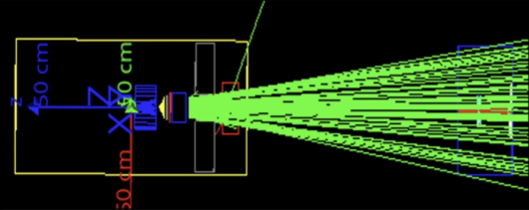
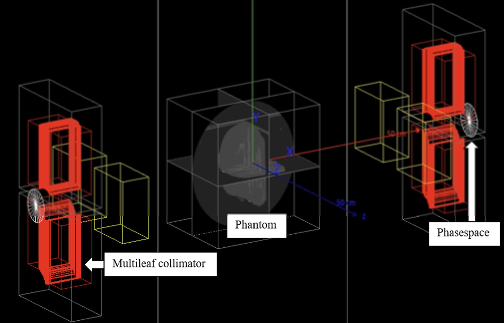
Monte Carlo simulations tackle complex radiation transport problems by asking a fundamental question: What happens if we repeat a random process millions of times? Instead of relying on broad approximations, Monte Carlo methods simulate radiation by tracking individual particles whether photons, electrons, or protons like millions of microscopic bullets passing through matter. Using the GATE platform, medical physicists can model complete clinical environments by simulating linear accelerators with complex beam delivery systems and multileaf collimators, with voxelized patient phantoms to track absorbed dose during the treatment and conducting patient-specific dosimetry to calculate exact energy deposition across varied tissue geometries.
Bringing Code to Life in the Classroom
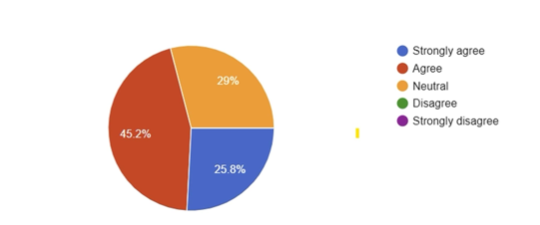
While Monte Carlo tools were traditionally utilized by medical physicists and researchers, there is a growing push to bring computational modeling into the classroom to support medical physics education. By converting static formulas into interactive visual simulations, students can watch radiation paths unfold in real time. To gauge initial attitudes, a survey was conducted among students at Universiti Kebangsaan Malaysia (UKM) to assess their receptiveness to the Monte Carlo GATE module prior to hands-on exposure. Out of 31 total survey responses evaluating whether the Monte Carlo GATE module may make learning coding more engaging, a strong majority of 71.0% expressed positive feedback, with 45.2% agreeing and 25.8% strongly agreeing. The remaining 29.0% of respondents held a neutral stance, while notably none selected disagree or strongly disagree, demonstrating broad support for the module’s role in enhancing student engagement during coding instruction. Survey on Monte Carlo GATE module will make learning coding instructions.
Sustainable Science: Green Phantoms Meet Virtual Models
Simulations are only as powerful as their real-world validation. To verify computer-generated dose predictions without exposing patients to unnecessary radiation, physical phantoms that mimic human tissue are essential in daily clinical physics. While commercial solid water phantoms have long been the industry benchmark, the emergence of bio-based tissue-equivalent phantoms such as those fabricated from mangrove represents a major shift toward sustainable, accessible, and patient-specific quality assurance. These bio-based phantoms offer distinct practical advantages. Mangrove wood combined with natural binders closely mirrors the physical density, effective atomic number, and radiation attenuation properties of human soft tissue. Furthermore, utilizing renewable organic raw materials drastically reduces fabrication expenses compared to costly commercial synthetic blocks, making routine quality assurance tools far more affordable for regional or resource-limited oncology centers. Natural particleboards can also be customized to model patient-specific anatomies. When validated using Monte Carlo GATE simulations, dose distributions inside these eco-friendly phantoms matched standard water phantoms with high accuracy, comfortably passing the strict clinical 3%/3mm gamma index criteria. Ultimately, combining high-fidelity simulations with practical, cost-effective bio-based phantoms strengthens the technical foundation of national cancer care while promoting green, sustainable medical physics.
Elevating Regional Cancer Care
This integration of Monte Carlo GATE simulations and reproducible physical phantoms directly supports national health initiatives, such as Malaysia’s National Strategic Plan for Cancer Control Programme (NSPCCP 2021– 2025). By providing affordable, standardized validation workflows and accessible training tools, healthcare institutions can bridge resource gaps by allowing regional centers to adopt high-precision techniques safely, standardize multi-center quality assurance across different hospital facilities, and expand patient access to ensure equitable, safe, and effective radiotherapy across diverse populations. Through the synergy of advanced computing, green technology, and hands-on education, Monte Carlo GATE continues to shape the future of medical physics across the Asia-Oceania region and beyond.