Dear Colleagues and Friends,
On behalf of the AFOMP Education and Training Committee (ETC), It is a great privilege to address the medical physics community through this issue of AFOMP Pulse.
Medical physics is advancing at an unprecedented pace. Artificial intelligence, automation, innovative radiotherapy, quantitative and hybrid imaging, theranostics, and other new technologies continue to revolutionize the clinical practice. While such developments present exciting new opportunities, they further underscore the significance of accessible, systematic, and continuously updated education and training for medical physicists in the Asia-Oceania region.
Our region is characterized by remarkable diversity with respect to healthcare infrastructure, technology availability, educational resources and opportunities for continuing professional development. Such diversity presents a particular challenge and at the same time unique advantage for the ETC in its regional cooperation. We are not only aiming to organize educational events; but also to facilitate the creation of sustainable learning platforms where the members of our profession learn from each other and develop practical skills and professional competencies.
During this term, the ETC is planning to enhance the education activities of AFOMP through webinars, AFOMP Schools, workshops, collaborative education programs, and interaction with National Member Organizations (NMOs).
An important priority is also to increase the involvement of early-career medical physicists and the next generation of professionals. Providing opportunities to learn from experienced colleagues, interact with experts from different countries, and participate actively in regional educational initiatives will be essential for developing future leaders in our profession.
Education becomes stronger when it is collaborative. I therefore encourage our NMOs, educators, clinical medical physicists, researchers, and young professionals to share their educational needs, expertise, and ideas with the ETC. Greater participation from across the AFOMP region will help us develop programs that are relevant, inclusive, and responsive to the changing needs of our profession.
As we move forward, our vision is clear: to connect expertise across the Asia–Oceania region and translate knowledge into better clinical practice, stronger professional capacity, and ultimately safer and higher-quality patient care.
I sincerely thank the AFOMP leadership, ETC members, NMOs, speakers, moderators, educators, and volunteers whose commitment makes these educational initiatives possible.
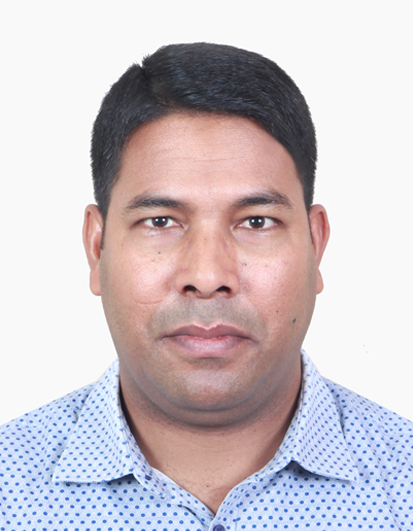
Md Akhtaruzzaman, PhD
Chair, ETC