
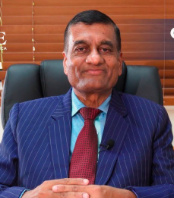
Prof. (Dr) Arun Chougule PhD, FIUPESM, FAMS, FIOMP, FICMP
Ex. Senior Professor and Head, Department of Radiological Physics, SMS Medical College and Hospitals, Jaipur, India
Past President of AFOMP, Past President of AMPI
Ex Chair ETC IOMP and Chairman IOMP Accreditation Board
arunchougule11@gmail.com
Prologue
Formal medical physics education in India began in 1962, when a one-year post-graduate course in radiological physics [Dip. R.P] was instituted at the Atomic Energy Establishment, Trombay. Six decades later, the country hosts several dozen academic programmes, a professional association with a national footprint, a statutory regulator that defines who may practise, and since 2021, legislative recognition of the medical physicist as a healthcare professional. This article traces that trajectory, takes stock of where medical physics education in India stands today, sets out the structural challenges that continue to constrain it, and proposes a set of directions for the decades ahead. The central argument is simple: India has solved the problem of academic supply but has not yet solved the problem of clinical competence assurance. The next phase of our development must be built around accredited programmes, structured residency, and competency-based assessment.
1. Introduction: A Profession Born of Physics, Raised by Medicine
Medical physics occupies an unusual position in the architecture of modern healthcare. It is not a clinical specialty in the conventional sense, yet no radiotherapy department can lawfully or safely function without it. It is a branch of applied physics, yet its practitioners spend their working lives in hospitals, at treatment consoles, beside patients. It is invisible to the public, yet every one of the millions of radiological examinations and radiotherapy fractions delivered in India each year depends on the quantitative rigour that medical physicists bring to dosimetry, quality assurance, treatment planning and radiation protection.
Because of this hybrid identity, the education of a medical physicist has always been a difficult thing to design. A curriculum that is too physics-heavy produces a graduate who cannot function in a clinic. One that is too clinical produces a technologist rather than a physicist. The history of medical physics education in India is, in large measure, the history of successive attempts to find the correct balance between these two poles, under conditions of severe resource constraint and rapidly advancing technology.
It is worth stating at the outset why this history matters now. India today carries one of the world’s largest cancer burdens, with well over 1.5 million new cases annually and a majority of patients presenting at locally advanced stages where radiotherapy is indicated. The country continues to expand its radiotherapy capacity, and each new linear accelerator, brachytherapy suite, PET-CT scanner and radiopharmacy requires qualified medical physics support. Whether that support is genuinely qualified as opposed to merely credentialed, is determined almost entirely by the education and clinical training system. The stakes of getting this right are measured in patient outcomes.
2. The Genesis: 1962 and the Trombay Beginning
In India, medical physics activities started in the mid-1940s with the appointment of Dr. Ramaiah Naidu as the first medical physicist at the Tata Memorial Hospital, Mumbai with a responsibility to set up and operate a radon plant for cancer treatment, however the medical physics education started much later. The origins of Indian medical physics lie not in a medical college but in the country’s atomic energy establishment. This was no accident. In the 1950s and early 1960s, the expertise required to handle radiation sources, calibrate them, and protect workers and patients existed in India almost exclusively within the Department of Atomic Energy. When Homi Bhabha’s institutional vision produced a national capability in nuclear science, radiological physics came with it as a necessary adjunct.
In 1962, a one-year post-M.Sc. course in radiological physics was started at the Atomic Energy Establishment, Trombay, renamed the Bhabha Atomic Research Centre (BARC) in 1967, under the aegis of the Mumbai University. The programme was designed to produce medical physicists who could serve as radiological safety officers and hospital physicists for the small but growing number of radiotherapy and nuclear medicine installations in the country. Its graduates were few in number, hand-picked, and trained in close proximity to the national standards laboratory and to the regulatory apparatus that was then being built.
Several features of that founding programme deserve emphasis, because they set patterns that persist to this day.
- It was national in scope and singular in provision. For the better part of two decades, essentially every practising medical physicist in India came from a single institution. This produced a remarkably uniform professional culture, a shared technical vocabulary, and a network of personal relationships that made national coordination possible long before there was any formal machinery for it.
- It was tightly coupled to regulation. The course was run by the same organisational family that certified radiological safety officers and inspected installations. Education, certification and regulation were, in effect, a single system. This gave the qualification unimpeachable authority.
- It was post-graduate and physics-first. Entrants already held an M.Sc. in physics. The course added radiological specialisation on top of a complete physics education rather than attempting to interleave the two.
- It included substantial hands-on exposure. Because the numbers were small and the facilities were world-class by the standards of the time, students received a depth of practical training that later mass expansion would find very hard to replicate.
The graduates of these early cohorts went on to establish medical physics services in the major cancer centres of the country and, in due course, to found the academic programmes and professional structures that followed. Any honest account of this period must acknowledge that it rested on the personal commitment of a small number of individuals working with limited means, a debt that the profession in India has not always adequately recorded.
A note from the twenty-third batch
I came to the course as a student of the twenty-third batch, in 1983–84. That ordinal is itself a small piece of corroborating evidence for the founding date: counting back twenty-two intakes from 1983 returns 1961–62, which is precisely where the institutional record places the first batch. By then the course had been running for two decades. The faculty I encountered included Dr A. K. Ganguly, Dr V. K. Iya, Dr K. G. Vohra, Dr S. D. Soman, Dr G. Subramanian, Dr U. Madhvanath, Dr S. J. Supe, Dr K. S. Parthasarathy, Dr. A. S. Pradhan, dr. B. C Bhat among many others. Dr P. S. Iyer was our course coordinator.
3. Building an Identity: 1976 to 1999
If the first phase produced practitioners, the second produced a profession. The establishment of the Association of Medical Physicists of India (AMPI) in 1976 gave the discipline a collective voice, a forum for scientific exchange, and eventually a scholarly publication of its own, the bulletin that would evolve into the Journal of Medical Physics. These are not ceremonial developments. A profession without a learned society has no mechanism for setting its own standards, no venue in which to argue about them, and no standing when it negotiates with government, hospital administrations or sister specialties. AMPI celebrates five decades of it contribution to profession.
The period also saw the creation of the Atomic Energy Regulatory Board in 1983, which formalised the regulatory framework governing radiation installations. For medical physics education this had a decisive consequence: the regulator, rather than the university system, became the effective arbiter of who could practise. AERB requirements regarding the qualification and deployment of medical physicists and radiological safety officers in radiotherapy and nuclear medicine facilities created a hard, enforceable demand for trained personnel and, equally importantly, defined what “trained” meant.
Academic provision began to diversify during these decades. Universities and institutes outside the atomic energy system started M.Sc. programmes in medical physics or radiological physics, initially in the south and west of the country and later more widely. This was a necessary development, a single institution could never have met national demand but it introduced, for the first time, the problem of variance. Programmes now differed in curriculum, in laboratory infrastructure, in faculty depth and, most consequentially, in the quality of clinical exposure they could arrange for their students.
The response to this variance was the requirement, enforced through the regulatory route, that an M.Sc. in medical physics be followed by a period of supervised clinical training in a recognised institution before the graduate could be certified to practise independently. In principle this was exactly the right instrument: it placed a common clinical filter downstream of heterogeneous academic inputs. In practice, as Section 7 of this article argues, the capacity to deliver that clinical training has never kept pace with the number of graduates seeking it, and this mismatch has become the single most serious structural problem in Indian medical physics education.
4. The Expansion Decades: 2000 to 2015
The turn of the century brought three simultaneous transformations: an explosion in the number of academic programmes, a revolution in radiotherapy technology, and India’s emergence as a significant player in regional and international medical physics organisations.
Programme proliferation. The number of institutions offering post-graduate medical physics education in India grew several-fold. Central universities, state universities, deemed universities, private institutions and hospital-based programmes all entered the field. Entry routes multiplied as well, with some programmes admitting students directly after a B.Sc. into integrated or two-year M.Sc. streams alongside the traditional post-M.Sc. diploma route. The profession went from producing a handful of graduates a year to producing several hundred.
Technological transformation. In the same period, Indian radiotherapy moved from cobalt-60 and two-dimensional planning to linear accelerators, three-dimensional conformal therapy, intensity-modulated radiotherapy, image-guided radiotherapy, stereotactic techniques, and high-dose-rate brachytherapy with volumetric planning. Nuclear medicine moved from planar gamma cameras to SPECT-CT and PET-CT, and towards therapeutic radiopharmaceuticals. Diagnostic radiology moved to multi-detector CT, digital radiography and increasingly sophisticated dose-management requirements. Each of these transitions expanded the knowledge base a competent medical physicist was expected to command.
International engagement. India was a founding participant in the Asia-Oceania Federation of Organizations for Medical Physics, established in 2000, and has since contributed leadership to AFOMP and to the International Organization for Medical Physics. Indian physicists have participated in IAEA technical cooperation and coordinated research projects, hosted regional congresses, and contributed to the international guidance documents that now shape curricula worldwide, notably the IAEA’s Training Course Series and Human Health Series volumes on academic programmes, clinical training and the roles and responsibilities of the clinically qualified medical physicist.
The tension of this period is easily stated. Academic capacity grew roughly in line with demand. Clinical training capacity did not. Technological complexity grew faster than either. The gap between what a graduate knew and what a practising physicist needed to know widened precisely when the consequences of that gap became more severe.
5. From Practitioner to Profession: 2016 to 2025
The most significant development of the recent period is not technological but legal. The National Commission for Allied and Healthcare Professions Act, 2021, brought medical physics within a statutory framework for allied and healthcare professions, providing for registration, recognition of qualifications and the setting of professional standards. For a discipline that had spent six decades being regulated primarily through radiation-safety law, that is, through its hazard rather than through its clinical function, this is a change of category, not merely of degree.
The practical implications are still unfolding, but the direction is clear. A statutory professional council implies a register, and a register implies agreed entry standards. Agreed entry standards imply recognised qualifications, which implies a mechanism for recognising and, by necessity, for declining to recognise academic programmes. In other words, the legislative development of 2021 makes programme accreditation not merely desirable but structurally inevitable. The profession’s task is to shape that accreditation process rather than to have it imposed.
Alongside this, the period has seen continued growth in clinical infrastructure, the introduction of online regulatory processes that have made licensing and personnel records more systematic, the arrival of advanced modalities including proton therapy and MR-guided radiotherapy at a small number of Indian centres, and the beginnings of serious engagement with artificial intelligence in treatment planning, auto-segmentation, quality assurance and image analysis.
6. Where We Stand Today: A Stock-Taking
A candid assessment of the present position must record both the achievements and the deficits, I have tried to do that honestly, unbiased.
What has been achieved. India has an established, internationally recognised medical physics community; a national professional association with a long publication record; a functioning regulatory framework that mandates medical physics staffing in radiation facilities; a substantial number of academic programmes distributed across the country; a cohort of medical physicists holding leadership positions in regional and global bodies; and, now, statutory recognition as a healthcare profession. Measured against where the discipline stood in 1962, or against the position of medical physics in most comparable middle-income countries, this is a considerable record.
What has not. There is no independent national body that accredits medical physics academic programmes against published standards and inspects them periodically. There is no structured, funded, nationally organised residency system with defined competencies and a common exit assessment. Clinical training placements are secured largely through individual initiative and institutional goodwill rather than through a planned allocation of a national resource. There is no routine, mandatory recertification tied to continuing professional development. Faculty depth in many newer programmes is thin. And the distribution of both training capacity and practising physicists remains heavily skewed towards the metropolitan centres of the south and west.
The honest summary is that we have built a large system without having built the quality-assurance apparatus that a large system requires. This is, ironically, a failure of exactly the discipline that medical physicists profess: we have expanded throughput without commissioning the process.
7. The Challenges
7.1 The clinical training bottleneck
This is the central problem, and it deserves to be named as such. Every other difficulty discussed below is either a contributor to it or a consequence of it.
Post-academic clinical training is where a graduate learns to do the job: to commission a linear accelerator, to interpret a failed quality-assurance result under time pressure, to plan a difficult case, to say no to a clinician when the physics does not support the request, and to carry professional responsibility for a patient’s dose. Nothing in a lecture theatre substitutes for this. Yet the number of recognised institutions able to offer such training, and the number of trainees each can meaningfully supervise, is bounded by clinical workload, equipment access and critically, the availability of experienced physicists with time to teach.
The consequences of the shortfall are corrosive. Graduates wait for placements, sometimes for extended periods, and lose momentum. Some accept nominal training that discharges the paperwork requirement without delivering the competence. Departments that do train carry an unfunded burden and the profession as a whole is left without any assurance that two physicists holding the same certificate have received remotely comparable preparation.
7.2 Heterogeneity and the absence of accreditation
Programmes vary enormously in their curriculum implementation, contact hours, laboratory provision, access to clinical equipment, faculty qualifications and assessment rigour. Some are excellent. Some are not. At present there is no systematic, published, independent means for a prospective student, a hiring department, or a regulator to tell the difference.
Accreditation is often resisted as bureaucratic overhead. That resistance misreads what accreditation is for. Its purpose is not to punish weak programmes but to make quality visible, to give good programmes a defensible standard to point to, and to give weak programmes a concrete improvement agenda. Every mature medical physics community has concluded that it is necessary.
7.3 The faculty deficit
Rapid programme expansion has outrun the supply of teachers who combine a doctoral-level physics education with substantial clinical experience. Many programmes are staffed by academics with limited clinical exposure or by clinical physicists with limited time and no formal preparation for teaching. Neither is adequate on its own. The problem compounds itself: programmes without strong faculty produce graduates who are less likely to become strong faculty.
7.4 A radiotherapy-heavy curriculum in a multimodality world
Indian medical physics education remains, in its centre of gravity, radiation oncology physics. That emphasis is historically justified as radiotherapy is where the regulatory mandate and most of the employment lie. But it has left diagnostic and interventional radiology physics, nuclear medicine physics, radiopharmaceutical therapy and MRI safety comparatively under-served, both in curriculum time and in clinical training opportunity.
This matters increasingly. Imaging volumes in India are growing far faster than radiotherapy volumes, dose optimisation in CT and interventional fluoroscopy is a genuine public health issue, MRI safety incidents are under-recognised, and theranostics is expanding rapidly. A profession that has trained itself almost exclusively for one modality will find itself absent from the places where it is most needed next.
7.5 Technology outruns the syllabus
Curricula are revised on a cycle of years; clinical technology changes on a cycle of months. Adaptive radiotherapy, MR-linac workflows, surface-guided setup, automated and knowledge-based planning, FLASH, radiomics and machine-learning-assisted quality assurance have all moved from research to practice faster than formal education has absorbed them. The gap is filled, if at all, by vendor training which is valuable but is not, and should not be mistaken for, independent professional education.
7.6 Research culture and the doctoral pipeline
Relative to the size of the community, Indian medical physics produces modest volumes of original research, and the doctoral pipeline is narrow. There are structural reasons: heavy clinical workloads, limited protected research time, few dedicated funding streams for clinical medical physics, and limited institutional expectation that a hospital physicist will publish. The cost is not only reputational. Without a research culture, a profession cannot generate its own evidence, cannot critically evaluate the technology it is sold, and cannot train the faculty it needs.
7.7 Career structure, recognition and retention
Career pathways for medical physicists in Indian hospitals remain inconsistently defined, with wide variation in designation, remuneration and progression between government and private institutions and between states. Recognition within the clinical hierarchy is uneven. The predictable result is attrition to industry, to other countries, and out of the discipline entirely, concentrated precisely among the most capable early-career physicists. Education cannot be considered in isolation from this: students make rational decisions about where to invest years of their lives.
7.8 Geographic inequity
Both academic programmes and advanced clinical facilities are concentrated in a limited number of states and cities. Students from under-served regions face higher barriers to entry, and hospitals in those regions face greater difficulty recruiting and retaining qualified physicists. Left unaddressed, this reproduces itself indefinitely.
8. Future Directions
8.1 Establish a national accreditation mechanism for medical physics education
The single highest-leverage intervention available to the profession is the creation of an independent accreditation body, developed by the profession, aligned with the statutory framework, and informed by international models, that publishes standards for academic programmes, assesses programmes against them, and reviews them periodically. Standards should address curriculum content, contact and laboratory hours, faculty qualifications and student-to-faculty ratios, access to clinical equipment, assessment methods and graduate outcomes. Accreditation should be a public status, and the list of accredited programmes should be published.
8.2 Replace “internship” with structured residency
The post-academic clinical training year should be reconceived as a residency: a defined training post, with a named supervisor, a documented competency framework, a logbook of performed and observed procedures, periodic formative assessment and a summative exit examination. Residency posts should be recognised, funded where possible, and counted as part of departmental establishment rather than treated as free labour or as a favour.
Expanding capacity will require creative approaches: hub-and-spoke arrangements in which a large centre supervises trainees rotating through smaller ones; regional training networks that pool equipment access; simulation, treatment-planning-system training and virtual commissioning exercises to build competence before scarce machine time is consumed; and formal recognition and support for the physicists who take on supervision.
8.3 Move to competency-based education and assessment
The relevant question at the end of training is not how many hours a trainee attended but what they can reliably do unsupervised. A national competency framework specifying, modality by modality, the tasks a newly qualified medical physicist must be able to perform, would give programmes a common target, give trainees clarity, and give employers meaning. Assessment should follow: objective structured practical examinations, case-based discussion, direct observation of procedural skills.
8.4 Invest deliberately in faculty development
The profession should treat faculty shortage as a solvable problem rather than a background condition. Practical measures include structured teacher-training for clinical medical physicists entering academia, joint academic-clinical appointments that keep teachers in contact with practice, sabbatical and fellowship schemes, mentorship pairing of new programmes with established ones, and shared national teaching resources, recorded lectures, laboratory protocols, planning case libraries so that a small programme is not obliged to build everything alone.
8.5 Build the digital curriculum
Artificial intelligence, machine learning, medical image informatics, scripting and automation, data management and cybersecurity in the clinical environment should become core, examinable curriculum content rather than optional electives. The medical physicist is the natural custodian of algorithmic quality assurance in the clinic, the professional who asks whether an auto-contour is safe, whether a model generalises to the local population, and how failure will be detected. If we do not train for that role, it will be occupied by others or, worse, by no one.
8.6 Broaden the modality base
Curricula and clinical training should be rebalanced to give substantive weight to diagnostic and interventional radiology physics, nuclear medicine and radiopharmaceutical therapy dosimetry, MRI physics and safety, and radiation protection of patients in imaging. Where clinical placements in these areas are scarce, regional rotations and structured short attachments offer a practical route.
8.7 Institute continuing professional development and periodic recertification
Competence acquired in 2015 does not certify practice in 2035. A CPD framework with credit requirements, recognised providers, and periodic revalidation linked to professional registration should be introduced. This is the natural complement to statutory registration, and the profession should propose it before it is prescribed.
8.8 Strengthen research and indigenous innovation
Protected research time in clinical posts, dedicated funding lines for clinical medical physics, multi-centre collaborative studies on questions specific to Indian practice, expansion of the doctoral pipeline, and closer engagement with domestic manufacturers of radiotherapy and imaging equipment would all repay investment. India’s cost constraints and case-mix are not disadvantages for research; they are a distinctive vantage point from which globally relevant work can be done.
8.9 Exercise regional and global leadership
India has the scale, the institutional depth and the accumulated experience to serve as a training resource for the wider region. Hosting regional training programmes, offering fellowships to physicists from neighbouring countries, contributing to AFOMP and IOMP guidance, and participating actively in IAEA activities are not merely acts of goodwill; they raise standards at home and give Indian medical physicists a voice in how international norms are written.
8.10 Make the profession visible
Finally, the profession must advocate for itself. Hospital administrators, clinicians, policymakers and the public should understand what a medical physicist does and why the role cannot be substituted. Clear position statements on safe staffing levels, engagement with health policy consultations, presence in public discussions of radiation safety, and outreach to physics students at the undergraduate level are all part of the work. Education and recognition are not separate agendas; a profession that is not understood will not be adequately resourced, and one that is not adequately resourced cannot train its successors. In this direction celebrations and reaching out to other health professionals, general publish using international days such as IDMP, IMPW are some examples.
9. Conclusion: The Next Sixty Years
The first sixty years of medical physics education in India tell a story of successful expansion. From a single course serving a handful of students, the country has built a distributed academic system, a professional community of substantial size, a regulatory framework with real force, and now a statutory identity as a healthcare profession. That achievement was neither inevitable nor easy, and it was accomplished largely through the personal commitment of individuals rather than through institutional largesse.
The next phase must be different in kind. The task is no longer to produce more medical physicists; it is to guarantee that every medical physicist India produces is genuinely competent to practise, in every modality the modern clinic employs, and remains so throughout a career. That requires accreditation of programmes, structured and adequately resourced residency, competency-based assessment, systematic faculty development, and mandatory continuing professional development. None of these is technically difficult. All of them require the profession to organise itself and to accept the discipline of external scrutiny.
Medical physicists spend their working lives insisting that a process which has not been measured cannot be trusted. It is time we applied that principle to our own educational system. If the six decades behind us were about building capacity, the decades ahead must be about assuring quality and if we do that well, the profession that emerges will be one the founders of 1962 would recognise as the fulfilment of what they began.
References and Further Reading
- International Atomic Energy Agency. Postgraduate Medical Physics Academic Programmes. Training Course Series No. 56. Vienna: IAEA.
- International Atomic Energy Agency. Clinical Training of Medical Physicists Specializing in Radiation Oncology. Training Course Series No. 37. Vienna: IAEA.
- International Atomic Energy Agency. Clinical Training of Medical Physicists Specializing in Diagnostic Radiology. Training Course Series No. 47. Vienna: IAEA.
- International Atomic Energy Agency. Clinical Training of Medical Physicists Specializing in Nuclear Medicine. Training Course Series No. 50. Vienna: IAEA.
- International Atomic Energy Agency Guidelines for the Certification of Clinically Qualified Medical Physicists. Training Course Series No. 71. Vienna: IAEA.
- International Atomic Energy Agency. Roles and Responsibilities, and Education and Training Requirements for Clinically Qualified Medical Physicists. Human Health Series No. 25. Vienna: IAEA.
- Atomic Energy Regulatory Board. Safety Code for Radiation Therapy Sources, Equipment and Installations, AERB/RF-MED/SC-1 (Rev. 1). Mumbai: AERB.
- The National Commission for Allied and Healthcare Professions Act, 2021. Government of India.
- Association of Medical Physicists of India. Journal of Medical Physics, archival volumes on education, training and professional development.
- International Organization for Medical Physics. Policy statements on the education, training and certification of medical physicists.
- Asia-Oceania Federation of Organizations for Medical Physics. Guidelines and policy documents on medical physics education and accreditation in the region.